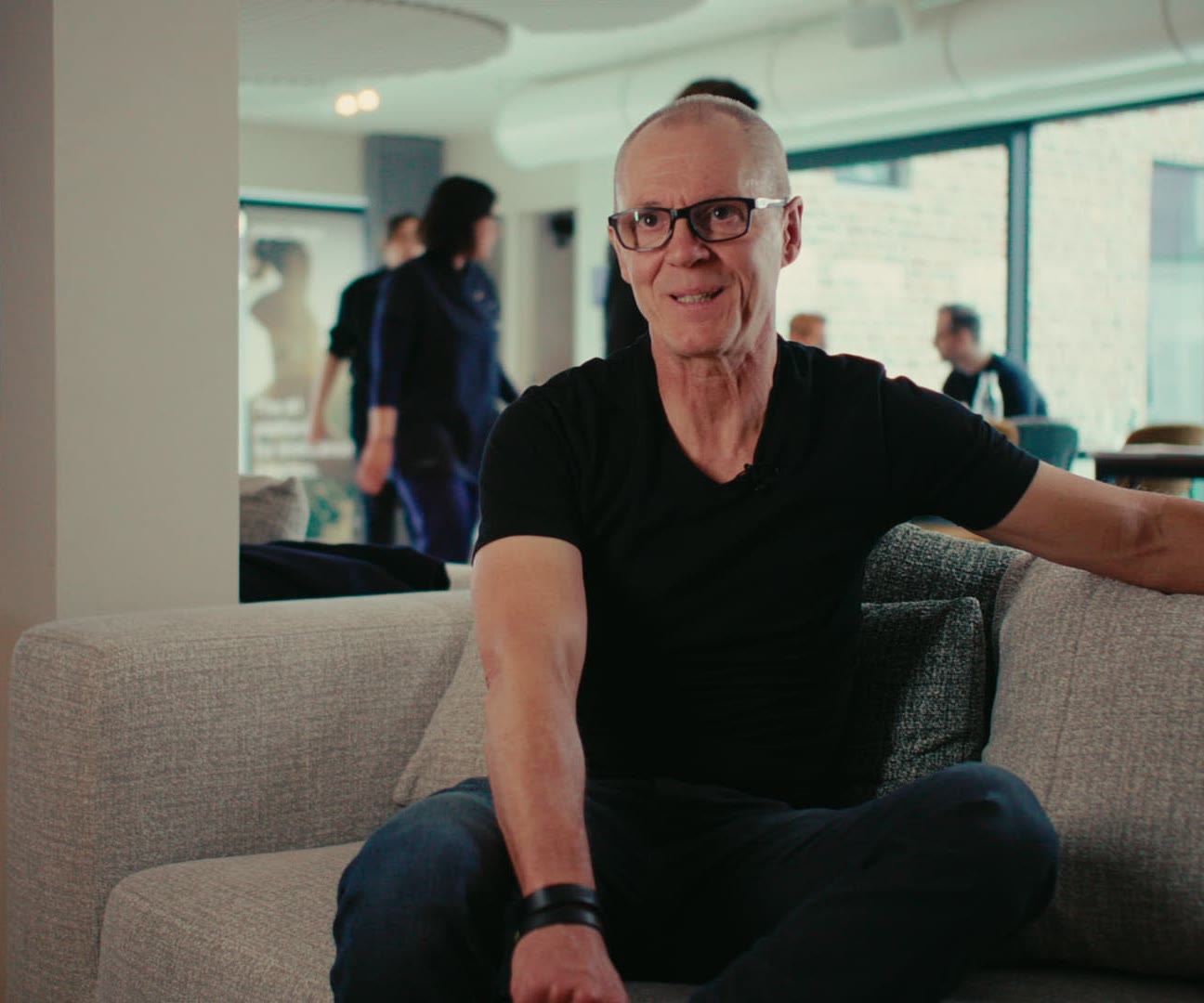
A coach who did it all himself first
Bruno Roels has been in sport since 1978, the year triathlon was born. Football, handball, table tennis, squash, athletics, military pentathlon, and for the last twenty years triathlon, as a competitor and as a coach. He runs FunctionalCoach as a small business, and he is one of the fortunate few who got to retire young and turn a passion into the work.
FunctionalCoach offers:
- Individual training guidance for triathlon, running, cycling and swimming
- Coaching built on the FATS model: energy, load, engagement and evolution
- Bike fitting and foot fitting
- Sports nutrition advice
- Swim technique coaching
He draws a sharp line between two kinds of athlete. A recreational athlete moves for their health. An amateur pins on a race number, and the moment you pin on a number you are competitive, which means you want to improve, which means you need training and a coach.
If you drink a glass of beer for the first time, you are drunk. But if you do it regularly, at some point you need something stronger than beer. Training works on exactly the same principle.
The model behind the coaching
Bruno does not coach from a schedule. He coaches from a system he named himself, the Functional Adaptive Training System, and it rests on three mechanisms.
Homeostasis, keeping the body in balance. Supercompensation, the overload that takes an athlete out of their comfort zone so they come back stronger. And adaptation, which is where coaching actually earns its keep.
How do I make sure my athlete does not become injury-prone because the intensity or the volume is too high? That is the balance you look for in coaching.
His model is built for the body an athlete has today, in a life that also contains a job, a family and a social circle. Not for a fictional athlete who lives for the sport.
In from the start
Bruno met Luc Van Lierde in 2008, and Frederik Van Lierde, and through them Ruben Vandevoorde. He joined the Coachbox story early because he believed in it, and he has been on the platform since 2015.
He is honest about the early days. The platform was rudimentary then, and there was a real gap in functionality compared to what else was on the market. What changed his mind was the rebuild.
With the new branding I was genuinely surprised by the functionality that has been added.
What he actually uses
The part that saves him most is the workout library and the exportable segments. He can take training sessions he built years ago, reshape them, and push them straight to his athlete.
My athlete uploads his training and I can see exactly how it was executed. That makes it much easier for me afterwards to analyse a training week or a whole period, and to adjust his intensity and volume quickly, so his performance improves year on year.
On AI he is neither breathless nor dismissive.
I do not see AI as a threat. I see it mainly as a colleague, because I challenge AI. It is the same thing I do with my athletes, constantly challenging them to reach a higher level. It is my ally rather than my enemy.
Less admin, more athlete
Ask Bruno what Coachbox has done for FunctionalCoach and the answer is not about features.
My eyes were opened by how many functions have been added that make it easier for us as coaches, because we spend far less time on administration and much more on the story of our athlete.
I think it is one of the best investments I have ever made for my small business.
For a coach working alone, that matters more than it does for a team. Every hour spent chasing files is an hour not spent with an athlete.
On making mistakes
Bruno has a view on coaching that is worth repeating in full, because it explains why a coach with fifty years behind him still changes his methods.
If you do not make mistakes, you are not doing it with passion, because then you are not challenging yourself to implement new principles.
He points at the records falling everywhere, the marathon dipping under two hours, the pole vault improving by a centimetre every fortnight. There is still margin. You find it by daring to fail and learning from it.
Young people learn from more experienced people, but experienced people also learn from young people.
Why he recommends it
For anyone who coaches with passion, it is a tool that makes it easier to spend your time on the essence of coaching, which is the one-on-one story with an athlete and the daily contact.
That, for Bruno, is what a coach is trained for. Everything else is overhead.