
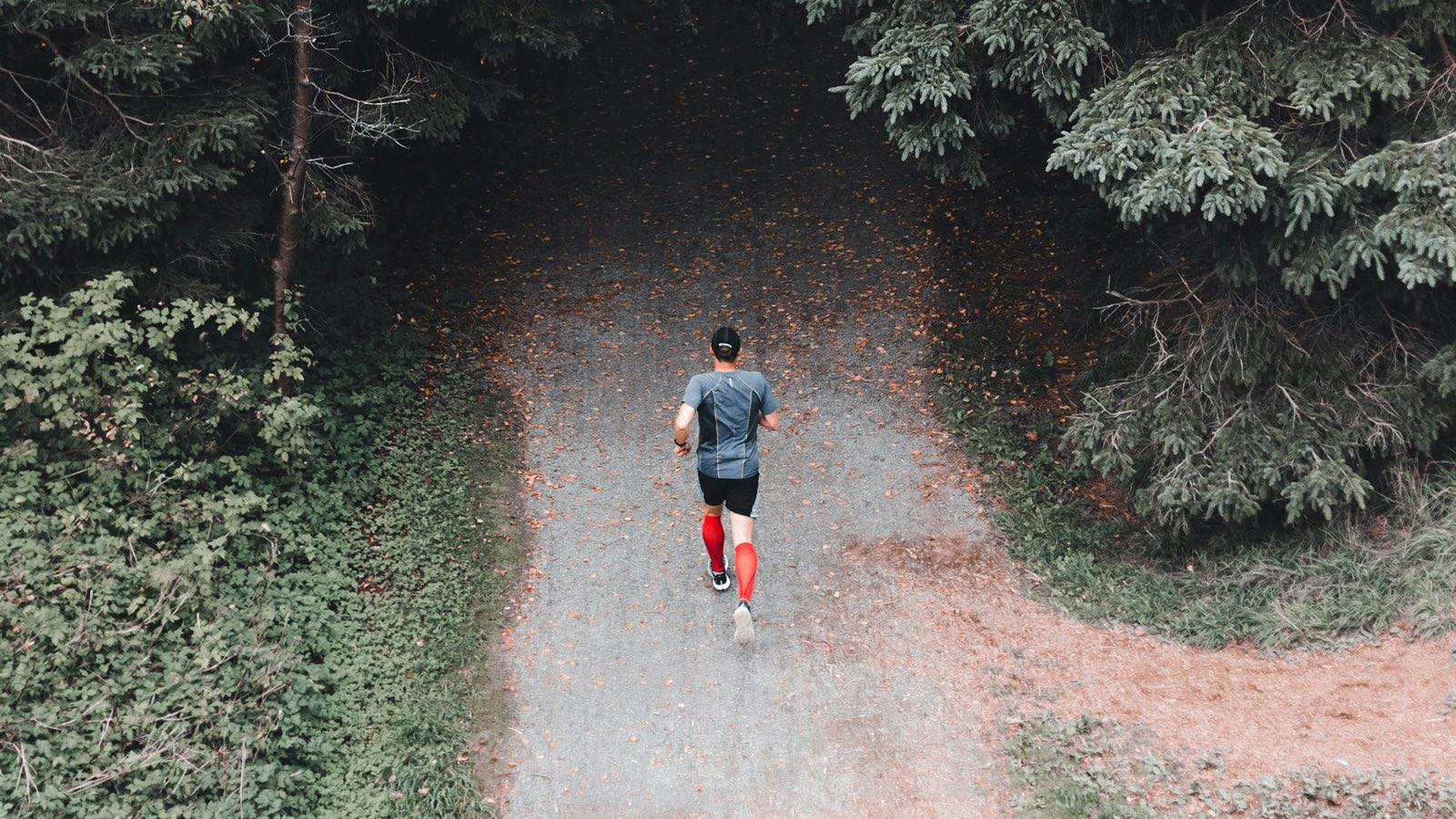
September and October mark a transition for many endurance athletes. Summer holidays are over, children return to school, professional demands increase again, and after months of structured training and racing, the competitive season may be approaching its end.
For some athletes, the result is familiar: enthusiasm for training fades, hard sessions suddenly feel harder to start, minor aches become more noticeable, and the next race no longer provides the motivation it once did.
We might jokingly call it “Septemberitis.”
To be clear, Septemberitis is not a medical or psychological diagnosis. Nor should a temporary loss of training motivation automatically be interpreted as a mental-health problem. Fluctuations in motivation are a normal part of a long training season.
Nevertheless, the phenomenon highlights something coaches sometimes underestimate: training stress does not exist independently from the rest of an athlete’s life. Work, family responsibilities, cognitive demands, illness, injury, sporting expectations and months of accumulated training can all compete for the same limited recovery resources.
By late season, simply telling an athlete to “stay motivated” may therefore be exactly the wrong approach.
Training is only one part of the stress equation
A useful illustration comes from Vleck and colleagues, who investigated training, work and life stress in 48 high-level amateur Olympic-distance triathletes competing at the ITU World Age-Group Championships.
These were serious athletes. Most were masters athletes, and many combined substantial training commitments with employment. Participants reported working or studying for an average of 7.6 hours (± 2.5 variability) per day while completing approximately 1.7 ± 0.5 training sessions per day. For 62.5% of the athletes, their training programme had to be structured around full-time employment.
Perhaps the most interesting finding was where their perceived stress came from.
Across the preceding year:
- 42.0% of total life stress was sport-related;
- 31.3% was related to personal factors;
- 14.0% was career-related;
- 12.7% was relationship-related.
Sport-related stress was therefore the largest contributor. Failure to achieve sporting goals, injury and illness were particularly likely to generate negative stress.
That finding deserves attention.
These were amateur athletes voluntarily participating in sport. Yet sport itself had become an important source of stress.
This does not mean competitive sport is inherently harmful. It illustrates that an activity pursued for enjoyment and achievement can gradually become another obligation, especially when ambitious training targets are added to an already demanding professional and family life.
Mental fatigue can affect exercise
There is also experimental evidence suggesting that cognitive fatigue can influence subsequent exercise performance.
In a well-known randomized crossover study, Marcora and colleagues asked 16 participants to complete either 90 minutes of demanding cognitive work or 90 minutes of watching neutral documentaries. They subsequently cycled to exhaustion at 80% of peak power output.
After the mentally fatiguing task, average time to exhaustion fell from 754 ± 339 seconds to 640 ± 316 seconds, approximately a 15% reduction. Thirteen of the sixteen participants stopped earlier following the mentally fatiguing condition.
Interestingly, the explanation did not appear to be a major deterioration in cardiovascular or metabolic function. Physiological responses during exercise were largely similar between conditions. Instead, participants reported a higher perception of effort following the cognitively demanding task. In practical terms, the same physical workload felt harder.
That observation provides an appealing explanation for something coaches frequently see: an athlete may still possess the physiological capacity to complete a workout, yet experience the session as unusually demanding after a stressful day at work.
However, caution is important.
A larger preregistered replication involving 30 recreationally active adults successfully induced mental fatigue but found no reduction in cycling time to exhaustion. Bayesian analysis provided moderate-to-strong evidence in favour of no performance impairment in that experiment.
Evidence from sport-specific research is also mixed. A systematic review and meta-analysis examining six studies in youth and young adult male football players found no statistically significant effect of experimentally induced mental fatigue on total running distance or tactical behaviour during small-sided games.
The practical conclusion should therefore not be that “mental fatigue reduces performance by 15%.” The evidence does not justify such a universal statement. A better interpretation is that cognitive and psychological load can influence how exercise is experienced and, under some circumstances, how athletes perform. The size and consistency of that effect vary between individuals and situations.
Recognising a late-season dip
There is no single biomarker of “Septemberitis”, and coaches should avoid diagnosing psychological states from training data. Instead, look for clusters of changes relative to the athlete’s normal behaviour:
- declining motivation or enthusiasm for training;
- persistently elevated perceived effort at familiar workloads;
- unusual fatigue;
- deteriorating performance;
- irritability or changes in mood;
- sleep disturbance;
- reduced appetite;
- recurrent minor health complaints;
- reduced willingness to compete or complete demanding sessions.
Physiological measures such as resting heart rate or HRV may add context, but they are non-specific. A reduced HRV value does not tell you that an athlete is mentally fatigued, overtrained or psychologically unwell. The value lies primarily in longitudinal patterns interpreted alongside subjective and performance data.
This distinction is especially important because a normal temporary motivational dip should not be confused with a mental-health disorder. At the same time, persistent or substantial changes in mood, behaviour or functioning should not simply be dismissed as lack of motivation. The IOC consensus on mental health in elite athletes emphasizes that mental-health symptoms occur in athletic populations and that the sporting environment itself can contribute relevant stressors.
Spot the dip before your athlete says it out loud.
No single number tells you an athlete is running on empty. The pattern does. Ask Coachbox AI "Who has rated the same sessions harder since September?" or "Analyse sleep, HRV, resting heart rate and notes since the last race" and you get an answer from the synced data in seconds. Then you start the conversation that matters.
What does this mean for coaching?
The first question should probably not be:
“How do we make this athlete train harder again?”
A more useful question is:
“Why does training currently require more effort than usual?”
Late in a long season, several explanations are possible.
The athlete may have accumulated substantial physical fatigue. Their major competitive goal may already have passed. Work demands may have increased. Family responsibilities may have changed. Months of structured training may have reduced their sense of autonomy. Or the athlete may simply need a temporary change in focus.
The appropriate intervention depends on the cause. This is precisely why monitoring training load without understanding the athlete’s wider context is insufficient.
Practical takeaways
1. Monitor life load, not only training load
A perfectly designed training programme can become inappropriate when work, family or psychological demands change. Regularly ask athletes about sleep, perceived fatigue, motivation, work stress and general wellbeing rather than interpreting training metrics in isolation.
2. Treat declining motivation as information
A temporary reduction in motivation is not necessarily a problem that needs to be eliminated. It can signal accumulated fatigue, loss of meaningful goals, excessive structure or changing priorities. Understanding why motivation has changed is more useful than simply demanding greater discipline.
3. Build genuine transition periods into the season
Athletes do not need to maintain peak competitive focus throughout the entire year. After important competition periods, reducing structure, intensity or overall training demands can provide both physiological and psychological recovery. A deliberate transition period is different from accidentally continuing race-season training until the athlete loses interest completely.
4. Rediscover what makes sport enjoyable
When motivation declines, identify what normally drives the individual athlete. A useful practical framework is to explore whether enjoyment comes primarily from:
- development: learning something new;
- competence: experiencing improvement;
- challenge: overcoming something difficult;
- connection: training with other people;
- movement: simply enjoying physical activity;
- autonomy: having freedom to choose.
These categories should not be viewed as a diagnostic tool or rigid scientific classification. They are better used as a conversation starter. An athlete motivated by challenge may enjoy trying a different discipline. Someone motivated by connection may benefit from more group sessions. An athlete who values autonomy may simply need several weeks with fewer prescribed workouts.
5. Change the stimulus when appropriate
The autumn transition can provide opportunities for hiking, trail running, mountain biking, skiing, strength training or technical development. For some athletes, replacing performance goals temporarily with learning goals, such as improving swimming technique, developing strength or learning a new skill, can restore curiosity without immediately creating another performance obligation.
6. Know when coaching is no longer enough
Coaches should support athletes, but they are not automatically qualified mental-health professionals. Persistent changes in mood, sleep, appetite, behaviour or everyday functioning require greater attention than an ordinary loss of enthusiasm for training. Where appropriate, referral to a qualified healthcare or mental-health professional is preferable to attempting to solve the problem through modifications to training alone.
Key take-home message
“Septemberitis” is not a disease, and losing some motivation after months of training does not mean something is wrong with an athlete. But a late-season motivational dip can be useful information.
Research in age-group endurance athletes demonstrates that sport exists within a substantial network of professional, personal and sporting stressors, while experimental research suggests that mental fatigue can sometimes alter perceived effort and exercise performance. The effects are variable, however, and no single physiological measure can diagnose the problem.
For coaches, the practical lesson is straightforward: when motivation and performance begin to fall, do not automatically add more motivation, more structure or more training. First understand the athlete’s total load.
References
- Clemente FM, Ramirez-Campillo R, Castillo D, Raya-González J, Silva AF, Afonso J, Sarmento H, Rosemann T, Knechtle B. (2021). Effects of Mental Fatigue in Total Running Distance and Tactical Behavior During Small-Sided Games: A Systematic Review With a Meta-Analysis in Youth and Young Adult’s Soccer Players. Frontiers in Psychology, 12, 656445. https://doi.org/10.3389/fpsyg.2021.656445
- Holgado D, Troya E, Perales JC, Vadillo MA, Sanabria D. (2021). Does mental fatigue impair physical performance? A replication study. European Journal of Sport Science, 21(5), 762-770. https://doi.org/10.1080/17461391.2020.1781265
- Koning T, van Schagen M. (2021). De talentformule. Arko Sports Media.
- Marcora SM, Staiano W, Manning V. (2009). Mental fatigue impairs physical performance in humans. Journal of Applied Physiology, 106(3), 857-864. https://doi.org/10.1152/japplphysiol.91324.2008
- Reardon CL, Hainline B, Aron CM, et al. (2019). Mental health in elite athletes: International Olympic Committee consensus statement (2019). British Journal of Sports Medicine, 53, 667-699. https://doi.org/10.1136/bjsports-2019-100715
- Vleck V, Massuça LM, de Moraes R, Falk Neto JH, Quagliarotti C, Piacentini MF. (2023). Work, Training and Life Stress in ITU World Olympic Distance Age-Group Championship Triathletes. Sports, 11, 233. https://doi.org/10.3390/sports11120233