
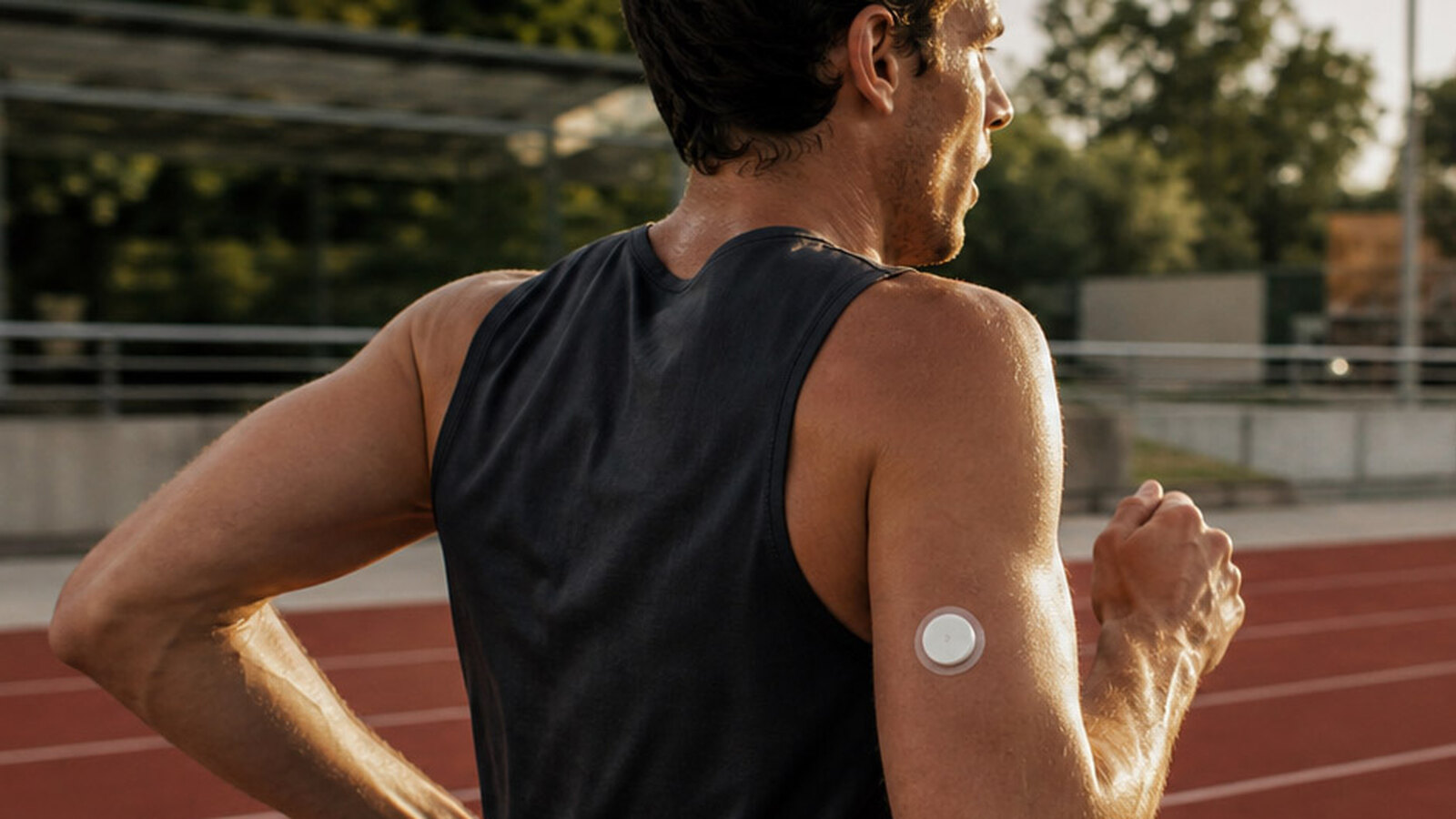
Continuous glucose monitoring (CGM) has rapidly shifted from a vital medical tool for diabetes management to a popular gadget in endurance sports. Marketed as real-time “fuel sensors”, these wearable devices promise athletes and coaches a direct window into metabolic efficiency, optimal fuelling windows and performance readiness. But does the science support these claims?
A comprehensive review by Helleputte, Podlogar and Gonzalez (2025), published in Performance Nutrition, critically examines the physiological reality of CGM use in elite endurance athletes without diabetes. This summary gives coaches and athletes the current scientific knowledge behind the data, and practical ways to apply these insights.
Research methodology
The authors conducted a thorough scientific review of current literature regarding the physiological mechanisms of glucose regulation and the validity, accuracy and practical utility of CGM technology in non-diabetic athletic populations. They evaluated evidence across several domains: real-time fuelling strategies, exercise-associated hypoglycemia (“bonking”), rebound hypoglycemia, training load monitoring, sleep quality and general nutrition.
Key research findings
The review reveals a significant disconnect between marketing claims and physiological evidence.
- The validity gap (interstitial vs blood glucose). CGMs do not measure blood glucose directly, they measure glucose in the interstitial fluid, the fluid between cells. This introduces a physiological time lag of 5 to 10 minutes at rest, which can increase significantly and become highly unpredictable during exercise, when glucose levels change rapidly. CGMs fail to capture these rapid changes in glucose levels. Furthermore, CGM accuracy significantly degrades during high-intensity exercise and during low-glucose states (below 4.0 mmol/L).
- Not a true “fuel sensor”. Blood glucose represents a mere fraction (around 4 grams) of circulating carbohydrates and contributes only 20 to 30% of energy during prolonged exercise. The majority of the energy is provided by muscle glycogen, fats, lactate and ketone bodies. The primary fuel source for working muscles is muscle glycogen. Because muscle glycogen cannot escape into the bloodstream, CGMs cannot measure it. There is a complete dissociation between circulating glucose levels and overall carbohydrate availability.
- No “performance zone” proven. The concept of a “glucose performance zone”, the idea that keeping glucose at a specific, elevated or highly stable level maximizes output, lacks any causal evidence. Studies on ultra-trail runners and elite cyclists showed no relationship between race completion times, power metrics and in-race glucose concentrations.
- The power of homeostasis. Healthy human bodies are incredibly efficient at maintaining glucose within a tight normoglycemic range (3.9 to 7.8 mmol/L), even during strenuous exercise and high-carbohydrate diets. When glucose spikes or drops during exercise, it is often a regulatory response driven by changes in exercise intensity, for example catecholamine-driven liver glucose output during sprints, rather than by fuelling status.
- Nocturnal data and overtraining. While severe energy restriction or low energy availability can lower fasting blood glucose, current evidence using overnight CGM profiles to detect overreaching or track sleep quality is scarce, inconclusive and highly prone to “compression lows”, the false low readings caused by lying on the sensor.
Interpretation
The primary takeaway for coaches is that glucose concentration is a result of appearance and disappearance rates, not a measurement of metabolic flux. A stable or elevated glucose reading on a monitor does not guarantee that muscle glycogen stores are sufficient. Conversely, a dropping glucose line does not automatically mean an athlete is under-fuelling. It simply means the muscle’s glucose uptake matches or slightly exceeds hepatic delivery at that moment.
Using CGM reactively, meaning waiting for a drop on the screen before consuming carbohydrates, violates fundamental principles of sports nutrition. Well-designed fuelling strategies must be proactive, calculated to maximize intestinal absorption rates (90 to 120 g/h of carbohydrates) and protect muscle glycogen before depletion occurs. Relying blindly on CGM data can lead to over-fuelling, causing gastrointestinal distress, or to unnecessary dietary anxiety when perfectly normal post-meal glucose spikes occur.
The technology does have one highly useful niche: mapping individual susceptibility to reactive (rebound) hypoglycemia. When carbohydrates are consumed 30 to 90 minutes before exercise, the resulting insulin surge combined with the insulin-independent muscle glucose uptake at the start of exercise can cause a transient plunge in glucose levels. CGM can help identify whether an athlete’s sluggishness or dizziness at the start of a session is linked to this phenomenon.
Practical tips for coaches and athletes
- Proactive over reactive fuelling. Never use a CGM to dictate when or how much to eat during a race. Plan carbohydrate intake based on exercise duration and intensity, for example 60 to 90 g/h or more for extended efforts, and practice this strictly in training to train the gut.
- Manage the pre-race window. If an athlete is prone to feeling dizzy or shaky in the first 30 minutes of exercise (rebound hypoglycemia), use CGM data in training to adjust pre-exercise nutrition:
- Consume a high-carbohydrate pre-race meal 2 to 3 hours before the start to safely top off liver glycogen.
- Avoid carbohydrate intake between 90 and 15 minutes before the start.
- If close-proximity fuel is desired, take a carbohydrate gel immediately before rolling off the start line, or during an active warm-up, so exercise begins before insulin spikes.
- Don’t fear the post-exercise spike. A temporary glucose rise after a meal or during post-exercise recovery is entirely normal and highly beneficial. The concomitant insulin response is necessary to maximize muscle glycogen resynthesis and kickstart anabolic recovery. Avoiding carbohydrates out of a fear of “glucose spikes” will severely impair next-day performance.
- Ditch the screen if it causes anxiety. If tracking glucose data leads to obsessive calorie adjustments, fear of normal foods or bedtime anxiety, remove the sensor. For healthy athletes, standard morning capillary finger-prick tests provide a cheaper, less intrusive and equally informative metric for baseline health, without the risk of compression-induced nocturnal scares.
Reference
Helleputte, S., Podlogar, T. & Gonzalez, J. Application potential of continuous glucose monitoring (CGM) in elite endurance athletes without diabetes: what do physiology and current evidence tell us? Performance Nutrition 1, 13 (2025). https://doi.org/10.1186/s44410-025-00013-7