
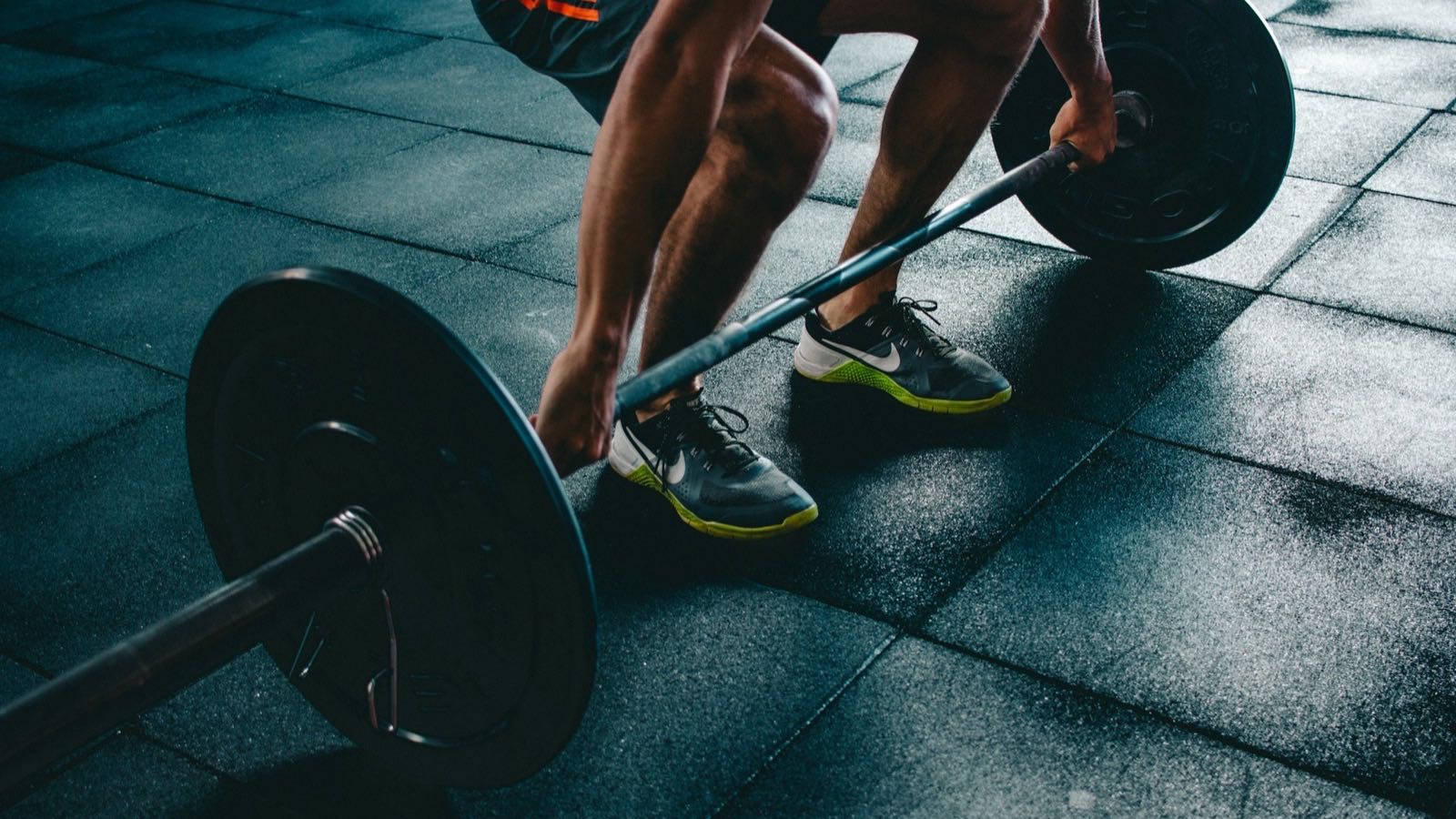
For trained endurance athletes, adding strength training to normal endurance training does not appear to blunt aerobic development, and it can even slightly improve economy and performance. The “interference effect” that coaches worry about is real. (It mainly affects strength and muscle growth, not the endurance side, and it is smaller in trained athletes than its reputation suggests).
The worry has a long history. In 1980, Hickson showed that combining the two training modes blunted strength gains compared with strength training alone. That finding hardened into a coaching rule of thumb: lifting and endurance work pull the muscle in opposite directions, so endurance athletes should either avoid heavy lifting or keep it light and high-repetition so they don’t “bulk up”.
In practice, strength work is often the first training skipped by endurance athletes. In a survey of 390 long-distance triathletes, only 54.6% reported doing any strength training, despite averaging almost 15 hours of training per week. The most common reasons for skipping it were lack of time (53.1%) and not knowing how to progress exercises or perform them with good form (52.5%).
This article draws on nine hallmark papers. Together they address three questions:
- Does strength training help endurance performance?
- Does it compromise aerobic adaptation?
- How worried should we be about interference?
Key findings from decades of scientific research
1. Performance improves, VO2max does not change
Compared with endurance-only controls, heavy strength training produced a moderate improvement in cycling performance (time to exhaustion and time trials). It also produced a moderate effect on anaerobic power and a small effect on cycling efficiency. There was no meaningful effect on VO2max, power at VO2max, maximal metabolic steady state or anaerobic capacity.
If we look at individual trials, some key observations included:
- Elite U23 cyclists: after 16 weeks, average power in a 45-minute time trial increased by about 8% with added strength training. It did not change with endurance training alone. Cycling economy and VO2max remained unchanged. The improvement appears to have come from sustaining a higher fraction of VO2max, which rose from 76% to 83% of the power at VO2max.
- Trained men and women: 40-minute performance improved by a similar amount in both sexes (men 6.0 ± 5.6%, women 6.4 ± 7.9%). Note the large standard deviations, which point to substantial individual variation.
- Late-race performance (durability): after 3 hours of submaximal cycling, average power in a 5-minute all-out effort improved by ~7% in both sexes. Oxygen cost and heart rate were lower in the final part of the long ride. Control groups showed none of these performance benefits.
Strength and endurance, finally in one place.
In Coachbox, you plan strength and core workouts right next to your endurance training. With the multi-sport calendar, you plan, track and analyse all workout types together.
2. Interference is real but small, and mostly hits strength
The Hickson study (1980) described that endurance work blunts strength development. This observation was later confirmed in the meta-analysis of Huiberts et al. (2023): in men, concurrent training seems to produce smaller lower-body strength gains than strength training alone. This is a small-to-moderate interference effect. In women, however, no interference was detected.
For endurance, the key result concerns training status. Only untrained people showed slightly smaller VO2max gains with concurrent training. Trained participants and highly trained endurance athletes showed no blunting.
3. Muscle size changes little, and may help when it does
In the elite U23 cyclists, 16 weeks of heavy lifting produced no measurable fibre hypertrophy. It did shift fibre type: type IIA fibres (fast but fatigue-resistant) increased from 26% to 34% of muscle area, at the expense of type IIX fibres (fast and easily fatigued). Capillary density remained unchanged. Across studies, increases in the size of the main working muscles are typically small, about 3–6%, with no gain in total body mass.
In the female cyclists, a larger increase in thigh muscle cross-sectional area was associated with larger gains in 40-minute performance (r = 0.73) and economy (r = −0.54). This is a correlation from one small study, and does not directly prove a causal effect.
4. The molecular “conflict” did not show up in trained cyclists
In eight trained cyclists, adding 40 minutes of moderate cycling or high-intensity intervals after squats did not suppress anabolic signalling 3 hours later. In fact, mTOR, a key growth signal, was slightly higher after squats plus moderate cycling than after squats alone. The mechanistic reviews reach a similar conclusion. AMPK activation is unlikely to be the sole cause of interference, and resistance training does not appear to impair mitochondrial adaptation.
5. Many triathletes skip it
In the survey of 390 long-distance triathletes, 54.6% did some strength training, and heavy strength training (>80% 1RM) was the most common form (39.4%). Among those who skipped strength work, the most common reasons were time constraints (53.1%) and uncertainty about exercise technique and progression (52.5%). Having gym access was associated with actually doing strength training.
“Strength training plays an important role throughout the entire season for endurance athletes. During the winter months, the focus is on building strength and towards the season we shift to more plyometric work and strength maintenance. Incorporating some strength exercises in a warm-up routine can do the trick to keep that strength stimulus in the program when the focus is more oriented towards endurance and race pace preparation.”
Practical takeaways for coaches and athletes
- Include heavy strength training. For trained athletes, the evidence points to modest performance gains and no cost to VO2max or other aerobic markers. This is the most consistent finding across the scientific sources.
- Lift heavy, use several exercises and keep going long enough. The positive trials used multiple lower-body exercises at heavy loads, typically around 4–10RM. They ran two sessions per week for 8–16 weeks. Programmes with one exercise, light loads or short durations largely failed to improve long-duration performance. Programme details beyond this, such as optimal sets, frequency or exercise choice, come from expert opinion rather than direct comparisons.
- Build strength in the off-season, then maintain it. Rønnestad and Mujika recommend building maximal strength in the preparation period. Start with lighter loads and technique work, and expect heavy legs in the first 2–3 weeks. In season, they suggest about one heavy, low-volume session per week to maintain gains. This is a reasonable practical interpretation of their trials, not a tested comparison of periodisation models.
- Don’t be afraid of muscle growth. Small increases in the size of the main working muscles occurred without gains in body mass and were associated with better performance in one study. Chasing large hypertrophy is not supported. Avoiding all growth isn’t necessary either.
- Test performance when tired, not just when fresh. Some benefits appeared only late in long efforts or as a higher sustainable fraction of maximum. A short fresh economy test or VO2max test may miss them. Time trials, critical power testing or a hard effort after prolonged riding are more likely to capture a change.
- Remove the practical barriers. For most athletes, the main obstacles are time and know-how, not physiology. To improve adherence, the authors suggest fitting strength work in by replacing part of other training rather than simply adding it. Coached instruction in technique and progression addresses the second barrier directly.
Key take-home message
For trained endurance athletes, heavy strength training is a low-risk, moderate-reward addition. And it has not been shown to harm VO2max or aerobic development. In cycling, it improves performance by an average of roughly 6–8% over a few months, mainly through better efficiency, more peak power and better resistance to fatigue late in long efforts. The interference effect mainly limits how much strength you gain, not how much endurance you build, and it fades as training status rises. Lift heavy, keep it consistent, maintain it through the season and judge the results over months, with tests that reflect how your athletes actually race.
References
- Aagaard P, Andersen JL. Effects of strength training on endurance capacity in top-level endurance athletes. Scand J Med Sci Sports. 2010;20(Suppl 2):39–47. doi:10.1111/j.1600-0838.2010.01197.x
- Coffey VG, Hawley JA. Concurrent exercise training: do opposites distract? J Physiol. 2017;595(9):2883–2896. doi:10.1113/JP272270
- Huiberts RO, Wüst RCI, van der Zwaard S. Concurrent strength and endurance training: a systematic review and meta-analysis on the impact of sex and training status. Sports Med. 2023. doi:10.1007/s40279-023-01943-9
- Jones TW, Eddens L, Kupusarevic J, Simoes DCM, Furber MJW, van Someren KA, Howatson G. Aerobic exercise intensity does not affect the anabolic signaling following resistance exercise in endurance athletes. Sci Rep. 2021;11:10785. doi:10.1038/s41598-021-90274-8
- Llanos-Lagos C, Ramirez-Campillo R, Sáez de Villarreal E. Heavy strength training effects on physiological determinants of endurance cyclist performance: a systematic review with meta-analysis. Eur J Appl Physiol. 2026;126:193–222 (published online 2025). doi:10.1007/s00421-025-05883-2
- Luckin KM, Badenhorst CE, Cripps AJ, Landers GJ, Merrells RJ, Bulsara MK, Hoyne GF. Strength training in long-distance triathletes: barriers and characteristics. J Strength Cond Res. 2021;35(2):495–502.
- Rønnestad BR, Mujika I. Optimizing strength training for running and cycling endurance performance: a review. Scand J Med Sci Sports. 2014;24:603–612. doi:10.1111/sms.12104
- Vikmoen O, Rønnestad BR. A comparison of the effect of strength training on cycling performance between men and women. J Funct Morphol Kinesiol. 2021;6:29. doi:10.3390/jfmk6010029
- Zhao YC, Gao BH. Integrative effects of resistance training and endurance training on mitochondrial remodeling in skeletal muscle. Eur J Appl Physiol. 2024;124:2851–2865. doi:10.1007/s00421-024-05549-5