
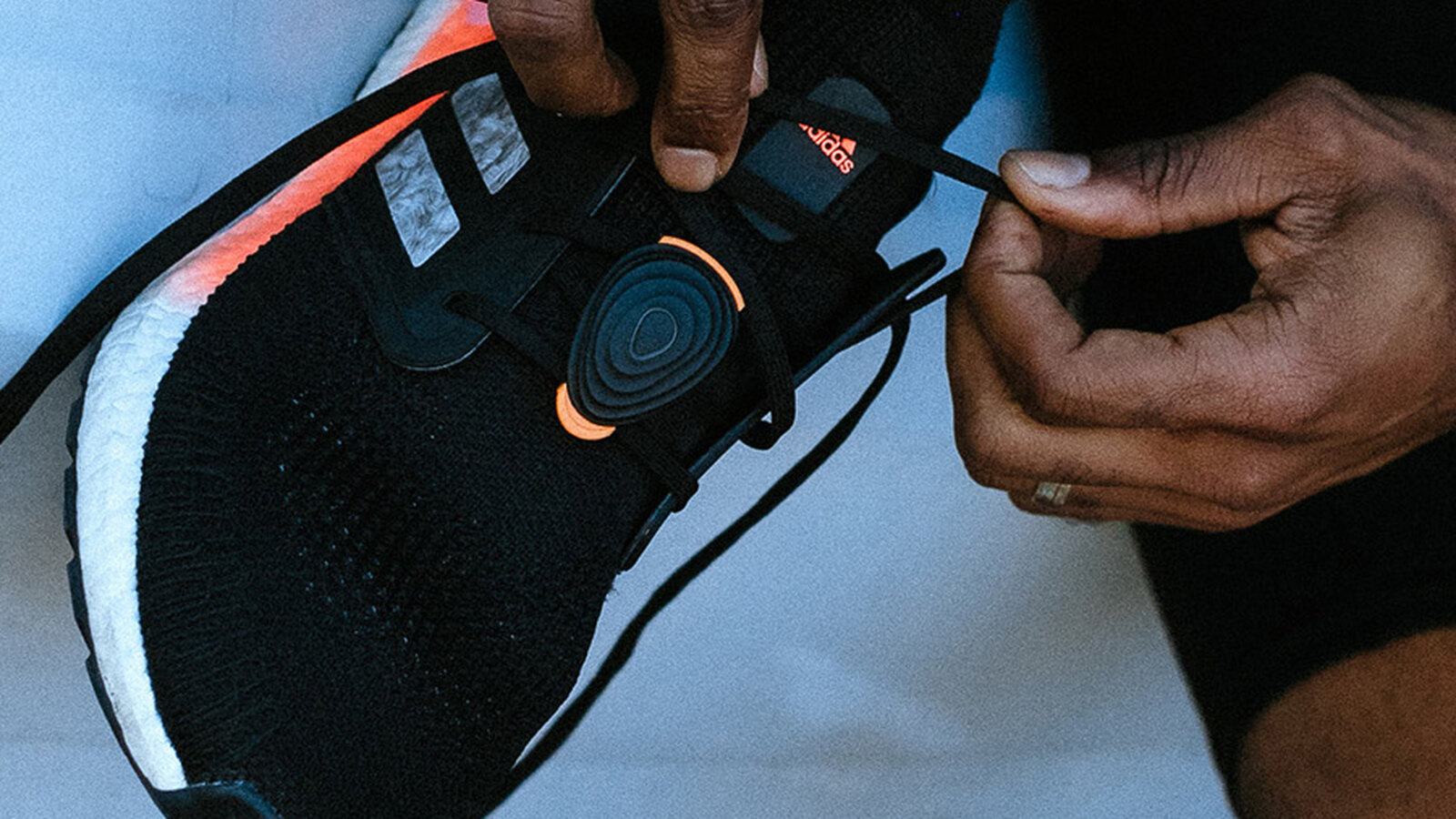
In the cycling world, the power meter has been the gold standard for precisely managing training intensity and pacing for decades. In recent years, this technology has made its way into running, primarily through small, shoe-mounted inertial measurement units (IMUs) like the Stryd sensor. While cyclists measure direct mechanical power output applied to the pedals, running power meters must estimate forces using physics laws, acceleration data and stride biomechanics. But how valid, stable and useful is this power metric in the daily practice of an endurance coach or athlete? In this blog post, we dive into the results of three scientific studies to map out the strengths and limitations of running power and the Stryd device.
Topic contextualization
When running on a flat surface, muscles convert metabolic energy into the forces required to move body segments, meaning there is no external dissipative load that can be directly measured, unlike a bicycle’s rear wheel or pedal. Traditionally, runners guide their training based on heart rate or running speed (pace). However, both parameters have inherent drawbacks: heart rate responds with a delay and is influenced by external factors like thermal stress or sleep deprivation, while running speed does not account for wind resistance, gradient or changes in running surface.
Wearable sensors promise to bridge this gap by delivering a stable running power reading (“wattage”) that directly reflects metabolic energy demands, regardless of environmental conditions. To determine the true value of this tool, it is crucial to understand how running power relates to physiological anchors such as the maximal lactate steady state (MLSS), the boundary between the heavy and severe intensity domains, and how the sensor responds when an athlete consciously alters their running mechanics.
Research methodology
The insights highlighted in this article are synthesized from three independent scientific studies:
- Study 1 (van Rassel et al., 2023): Fifteen recreationally active and trained runners underwent treadmill testing, including incremental exercise tests and constant-speed trials, to precisely establish their MLSS. The stability, sensitivity and reliability of the Stryd sensor were evaluated around this metabolic threshold.
- Study 2 (Baumgartner et al., 2021): Thirty-two experienced runners completed constant-speed treadmill trials while deliberately modifying their spatiotemporal gait characteristics (stride length, ground contact time and arm swing). Metabolic cost (via oxygen consumption, VO2) and Stryd power were recorded simultaneously.
- Study 3 (Pardo Albiach et al., 2021): Fifteen young triathletes were evaluated to identify which biomechanical and power variables strongly correlate with increased running speed. Advanced clustering analysis (machine learning) was utilized to map specific gait patterns.
Key findings
- High reliability at threshold intensities. The Stryd sensor proved to be exceptionally reliable and stable. Between repeated trials and within a prolonged threshold run, the measured running power remained remarkably consistent (intraclass correlation coefficient, ICC = 1.00, reflecting excellent reliability). Furthermore, the metric was sensitive enough to detect small changes in intensity (5% below or above MLSS).
- Strong link to metabolic demand. Under normal running conditions, a strong linear relationship exists between Stryd-measured power and actual oxygen uptake (R² = 0.84) near the lactate threshold. This confirms that the running power accurately mirrors physiological stress during an athlete’s natural gait.
- The “blind spot” for running economy. When runners consciously altered their biomechanics, for example forced overstriding or understriding, their metabolic cost spiked significantly. However, the Stryd sensor failed to register this increase in energy demand, reporting virtually unchanged running power. In isolation, the device cannot detect acute fluctuations in running economy caused by altered movement efficiency.
- Profiles of faster athletes. Data from the triathlete cohort revealed that peak running speed was not exclusively dictated by a high VO2max. Instead, faster individuals were distinguished by superior power management: higher power per kilogram, greater horizontal power, longer stride lengths, a lower form power ratio and shorter ground contact times.
Interpretation and practical tips for coaches and athletes
What do these findings mean for your daily training? Running power is a powerful metric, provided you understand its operational boundaries. Because shoe-mounted sensors calculate rather than directly measure mechanical forces, they cannot account for the subtle energetic shifts that happen in the muscle-tendon complexes during fatigue or inefficient movement. If an athlete develops an inefficient “stomp” or loses technical integrity late in a race, their actual metabolic energy expenditure rises, but the Stryd sensor may read the exact same power numbers.
Nonetheless, due to its exceptional stability and high responsiveness to environmental factors like slope and wind, running power remains a vastly superior pacing tool compared to relying solely on pace or heart rate.
Actionable training takeaways
- Execute flawless pacing strategies. Since Stryd running power is highly reproducible and stable around the MLSS, athletes can confidently use target wattages to pace threshold sessions or races. This prevents the common mistake of blowing up early on rolling hills or in windy conditions.
- Monitor “cardiac creep” and efficiency decoupling. Because the sensor cannot detect acute losses in running economy, coaches must always pair wattage data with heart rate. If an athlete’s wattage remains constant during a long run but heart rate steadily climbs (decoupling), it may suggest a drop in running economy or mounting metabolic fatigue.
- Optimize biomechanical metrics for speed. To build faster runners, training shouldn’t just target cardiovascular engine capacity (VO2max) but also specific power delivery (W/kg). Use the Stryd ecosystem to monitor and optimize biomechanical efficiency: aim for a lower form power ratio, so less energy is wasted vertically and more is directed horizontally, and shorter ground contact times.
- Do not use power for in-field gear or tech checks. If you are trying to evaluate whether a new pair of “super shoes” or a technique adjustment improves an athlete’s running economy, do not rely on Stryd wattages alone. Such acute efficiency assessments still require a metabolic cart (oxygen consumption measurement) in a controlled laboratory setting.
Scientific references
- van Rassel, C. R., Ajayi, O. O., Sales, K. M., Griffiths, J. K., Fletcher, J. R., Edwards, W. B., & MacInnis, M. J. (2023). Is Running Power a Useful Metric? Quantifying Training Intensity and Aerobic Fitness Using Stryd Running Power Near the Maximal Lactate Steady State. Sensors, 23(21), 8729.
- Baumgartner, T., Held, S., Klatt, S., & Donath, L. (2021). Limitations of Foot-Worn Sensors for Assessing Running Power. Sensors, 21(15), 4952.
- Pardo Albiach, J., Mir-Jimenez, M., Hueso Moreno, V., Nácher Moltó, I., & Martínez-Gramage, J. (2021). The Relationship between VO2max, Power Management, and Increased Running Speed: Towards Gait Pattern Recognition through Clustering Analysis. Sensors, 21(7), 2422.